At the Chit Chat Diner, a 24-hour landmark known for its whimsical, castle-like architecture and sweeping views of the Manhattan skyline, the latest addition isn't on the menu — it's on the wall.
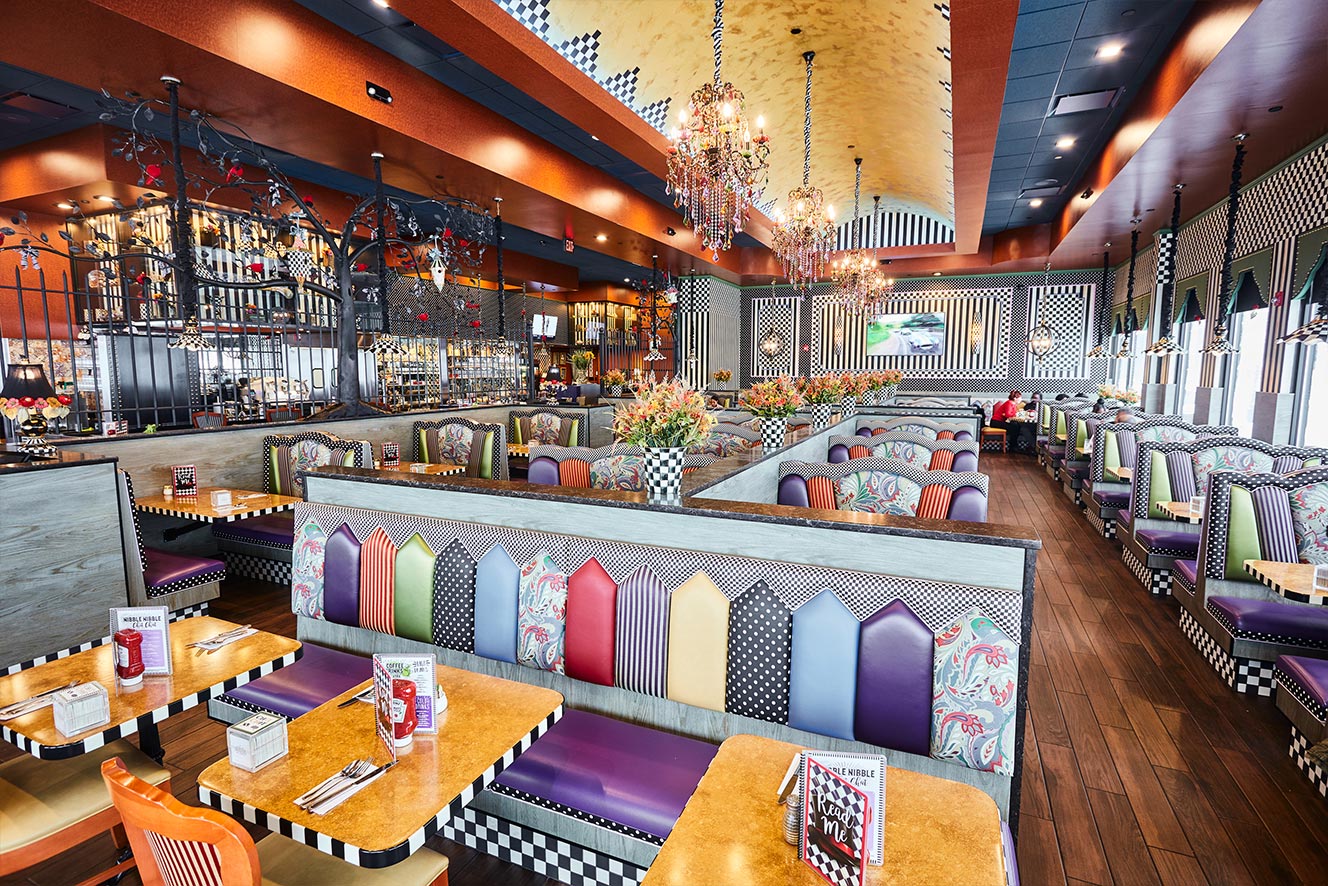
Master installer George Kazameas spent the better part of two weeks inside the diner's dining room, hand-applying a large-scale scenic wallcovering mural across one of its signature feature walls. The project, completed for the diner's ownership, adds a new layer of old-world craftsmanship to a restaurant already known for its theatrical, larger-than-life interior.
"This is a room that doesn't do anything halfway," Kazameas said. "The architecture already tells you a story before you sit down. The mural just had to earn its place in that story."
Central to the room's identity is MacKenzie-Childs, the Aurora, New York-based decorative arts house whose hand-painted, theatrically maximalist aesthetic has become one of the most recognizable design languages in American interiors. Founded in 1983 by artists Victoria and Richard MacKenzie-Childs, the brand grew out of the couple's backgrounds in theater and ceramics — a lineage that shows in wallcoverings like its signature Courtly Check, a bold, off-kilter checkerboard motif that reads as playful up close and architectural from across a room.
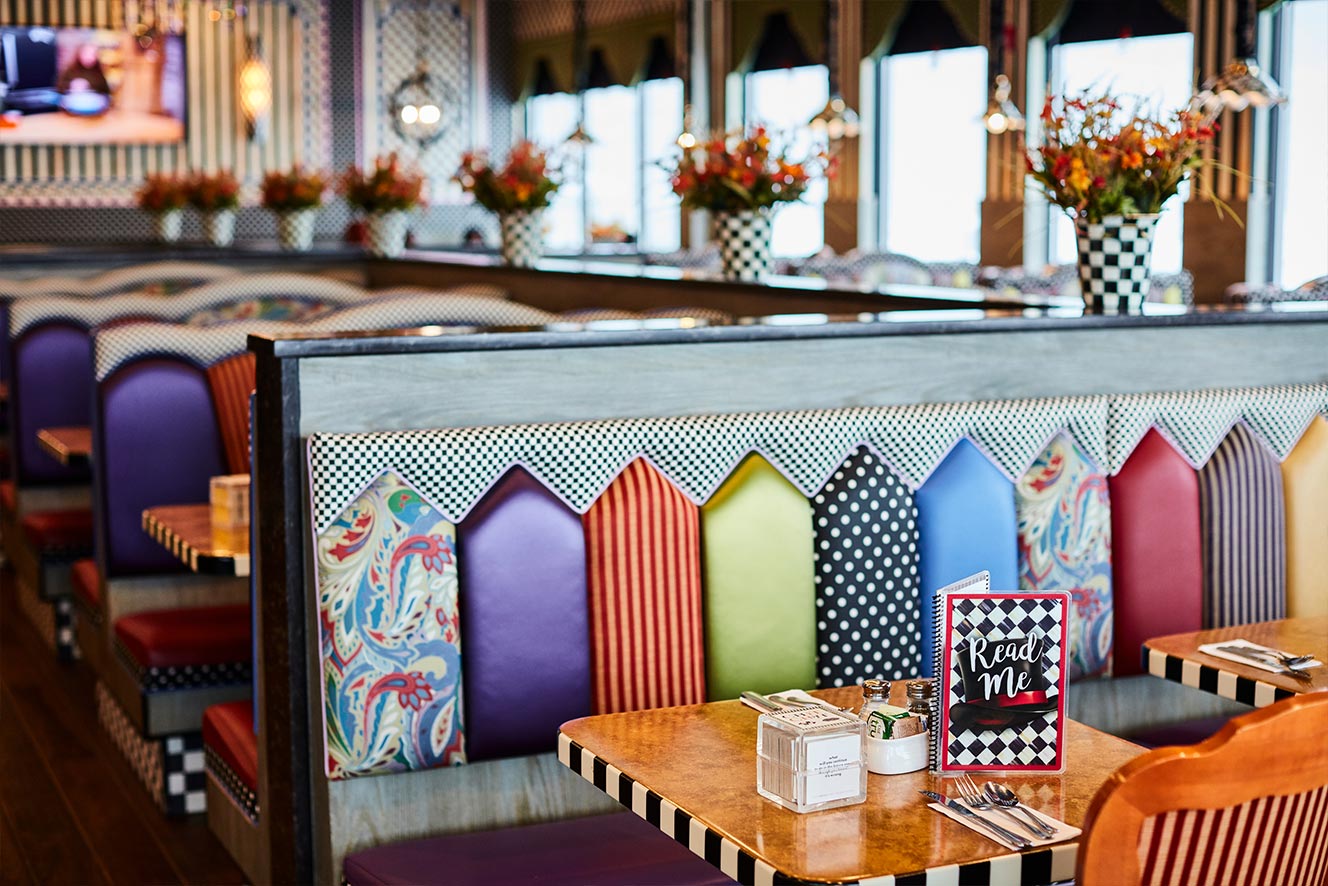
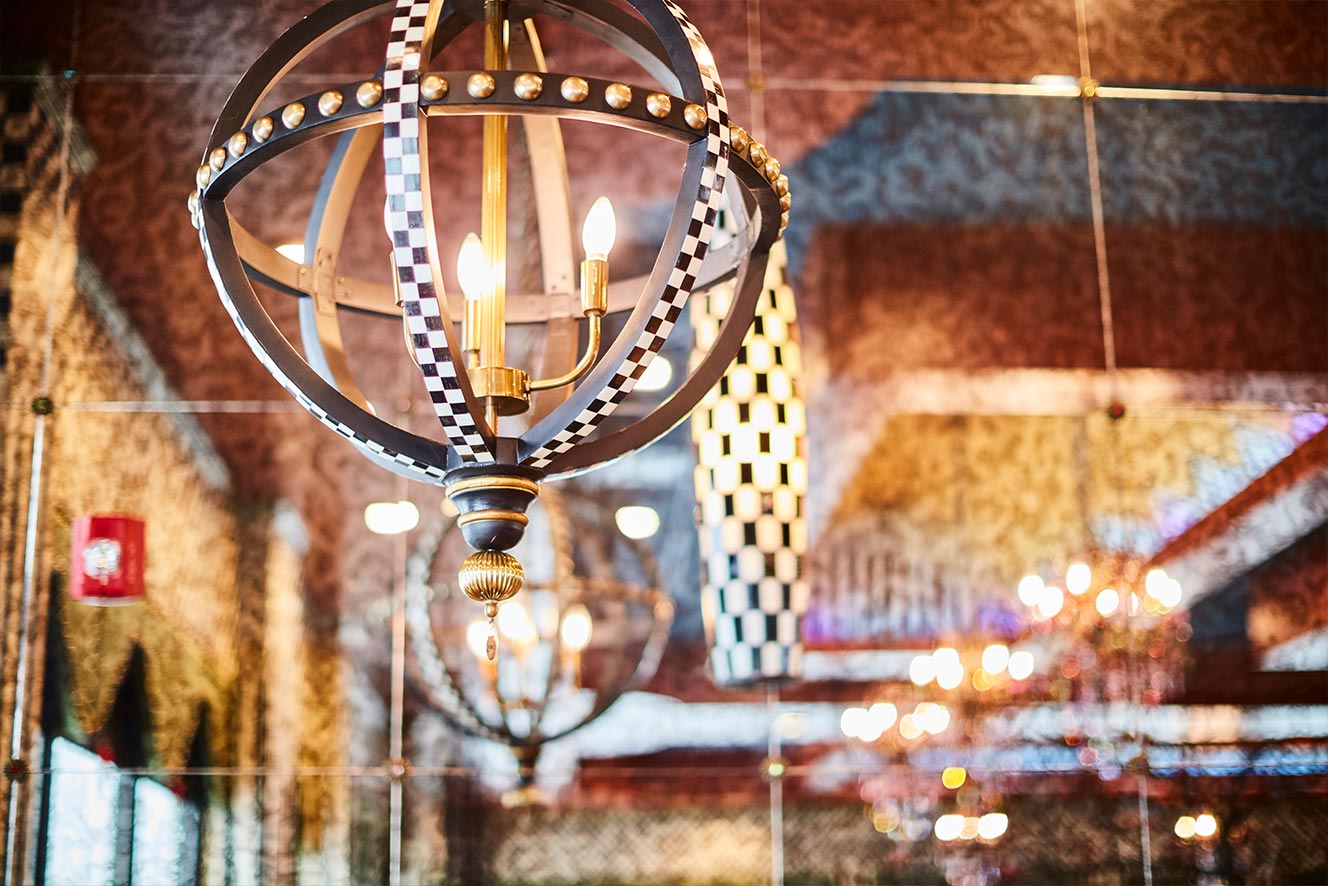
"MacKenzie-Childs doesn't do anything quietly, and neither does this diner," Kazameas said. "That's exactly why it works here. You're not trying to calm the room down — you're trying to give it a pattern that can hold its own against chandeliers, checkerboard floors and a dining room that already looks like a stage set."
Unlike a subdued neutral pattern meant to recede into the background, Courtly Check and its companion motifs are designed to be a focal point — hand-finished, richly colored, and unapologetically decorative. That quality, designers say, is what separates a MacKenzie-Childs installation from a conventional commercial wallcovering: it doesn't soften a maximalist room, it completes it.
"A lot of clients come to us wanting a wall that calms a space down," Kazameas said. "This wasn't that kind of job. This was a wall that had to raise its hand and say, 'I belong in this room, too.'"
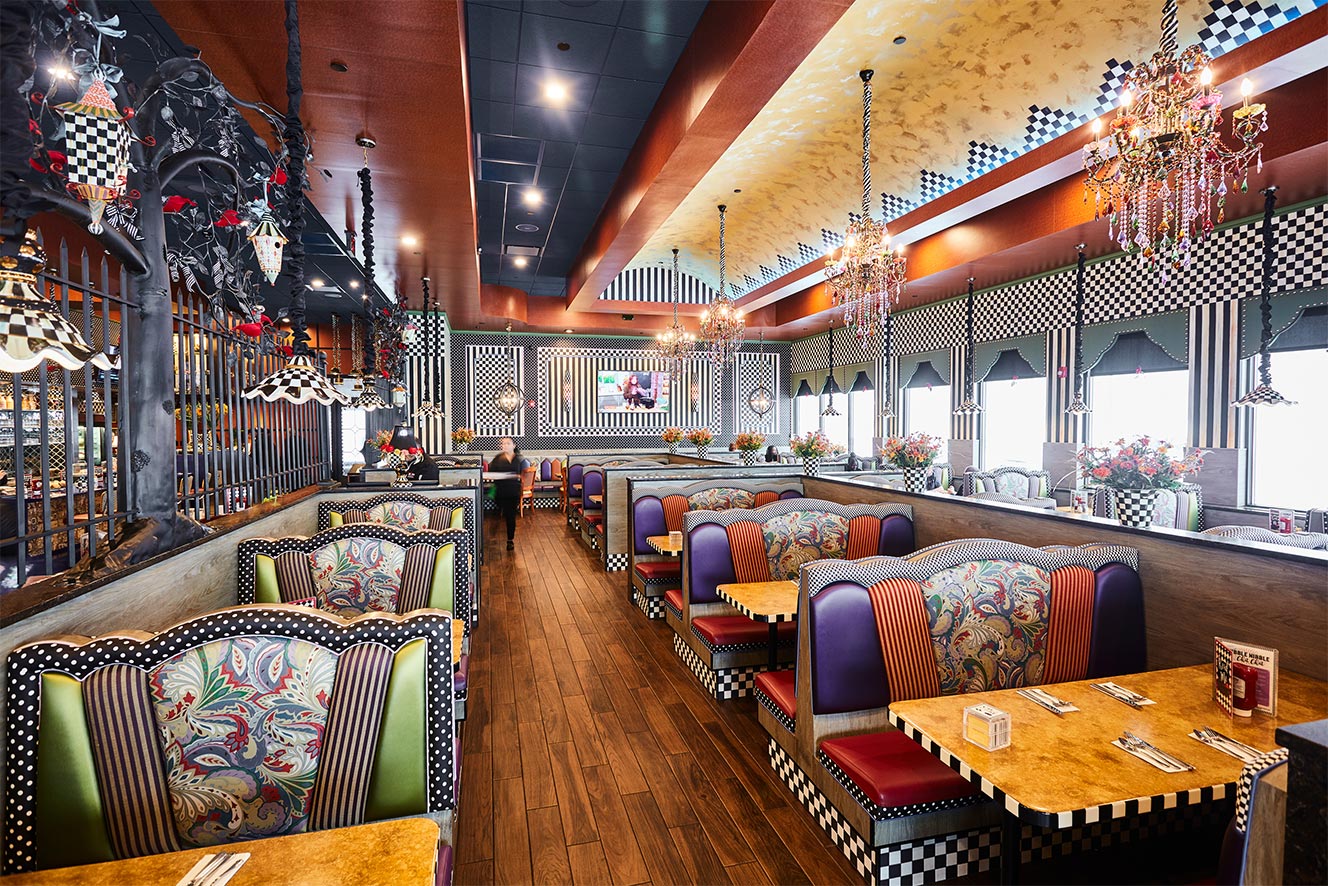
The diner, which draws steady crowds for its all-day menu and its reputation as an only-in-New-Jersey landmark, has long been recognized for décor as memorable as its food. Its ownership has cultivated that identity since the current building opened, embracing an eclectic, maximalist style that regulars have compared to dinner theater as much as a diner.
Kazameas, whose installation work spans historic homes, luxury residences and hospitality spaces across the country, approached the commission the same way he would a museum-grade restoration: with a full site assessment, moisture and substrate analysis, and a laser-measured layout before a single panel went up. "A diner wall takes a different kind of abuse than a dining room in a private home," he said. "Steam, grease, constant traffic — you have to build the installation to survive all of it, not just look good on installation day."
The finished installation now anchors the dining room alongside the diner's chandeliers, patterned ceiling work and colorful booths. Kazameas said the goal was never to compete with the space's existing character, but to give it one more reason to stop guests mid-conversation. "You want people to notice it, then forget they noticed it — because they're back in their conversation, in their coffee, in their booth," he said. "That's the test of whether an installation belongs in a room like this."
The project is among a growing number of commercial and hospitality commissions Kazameas has taken on in recent months, reflecting a broader trend of restaurants and diners investing in statement interiors as a point of differentiation. "Nobody's driving across three towns for a diner without a story," Kazameas said. "The wall is part of how you tell it."
Bring This Level of Craftsmanship to Your Project
Planning a Wallpaper Installation?
Share your wallcovering, room dimensions and project location for an installation review and quote.